Dive Visibility Forecast: How Azure Predicts What You'll See Underwater
You know the drive. An hour down the highway, gear in the boot, a flat blue ocean on the weather app. Then you reach the stairs, look down, and the water is the colour of weak tea. The swell was small. The wind was light. The vis was three metres.
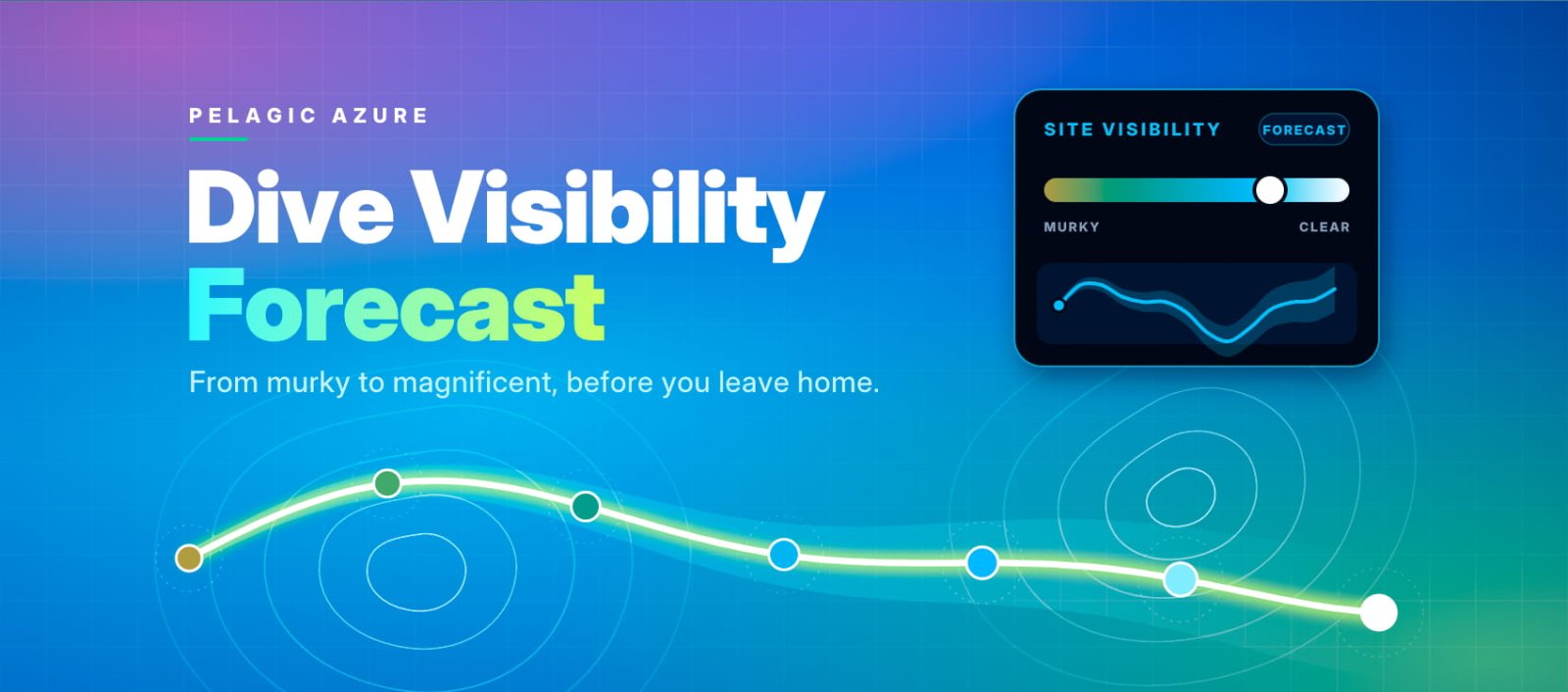
Every diver on this coast has lost a day like that. It's why we built Azure, Pelagic's dive visibility forecast. Not a regional guess and not a swell report with a hopeful label. A number for the site you're planning to dive, in metres, before you leave home.
Why a normal forecast can't tell you the vis
A weather forecast describes the sky and the sea. Visibility is a different animal. It's about the water inside your dive site, and that water is being pushed and stirred by a lot of things at once, many of them from days ago.
A bay can look perfect from the carpark and be loaded with sediment. A headland can look rough and be running clean, blue water. No single number from a marine forecast can see that. You can't read it off a swell chart, and you can't always read it off the shore either.
Azure was built to close that gap.
A model that tracks the forces that move the water
This is the part we're proudest of. Azure doesn't lean on one or two obvious inputs. It follows the whole picture: what the ocean is doing, what the sky has been doing, what the tide is doing and what has been washing into the water. It follows how long the effects of all of it hang around, and what the water is likely to do next.
That includes the things divers argue about at the carpark and a few that are hard to see from the shore at all. Swell and wind. The tide and where in its cycle you'll be getting in. Rain, and how long its effect lingers. The sediment that a big swell lifts and holds in suspension long after the sea looks calm. The cold, clean, blue water that arrives on the right kind of wind. The way the water changes through the year. Even the colour of the water itself.
And it doesn't treat each one as a separate dial. A big swell means one thing after a dry fortnight and something very different after a week of rain. Azure reads them together, the way an experienced local would, except it's watching every site at once, all day long.
An hour of conditions isn't a dive site's story. The last few days are.
Every dive site has its own personality
Here's what makes it genuinely useful: Azure is built site by site. Two sites ten minutes apart can respond to the same conditions in completely different ways.
Take a big south-easterly swell. An exposed open-ocean site takes it head on, with white water, surge and a churned-up bottom. A site tucked behind a headland might barely notice. Turn the swell around and the picture can reverse. Any diver with a few NSW seasons behind them knows you don't ask "is it big?", you ask "is it big for that site?"
Each site in Azure has its own character: how clear it normally runs, how exposed it is, how it handles rain, how quickly it recovers. So the same weather can produce a green light at one site and a red flag at the next. That is the difference between a forecast you glance at and one you plan around.
Why visibility can stay poor on a calm, sunny day
This is the one that catches everyone out, and it's where Azure earns its keep.
Water doesn't clear the moment the weather does. After a big blow or a few days of rain, the fine stuff takes time to settle. The surface can be glassy and the sky can be blue while the water below you is still hazy. Divers call it waiting for it to come good, and they're right: yesterday matters as much as today.
Azure carries the recent past forward, so a flat Sunday after a rough Friday can still read cautiously, then improve step by step as the water recovers. Some sites bounce back fast. Others hold onto murk for days. The forecast knows the difference, which is how it can tell you to save the drive on a day that looks perfect, and to go on a day that doesn't.
Tide, timing and the water you're actually diving in
Visibility isn't only about weather. It's about which water is sitting at the site when you get in. Clean ocean water can push in on the incoming tide. Murkier water can drain out on the outgoing, especially near estuaries and creek mouths. That's why locals will tell you a site is best on the push.
It's also why Azure is worth checking for timing, not just for the day. If a site looks marginal in the morning, the afternoon might be the dive you wanted.
Catch the blue water days
Every NSW diver remembers the day the water turned. Cold, clean, impossibly blue, with visibility that feels like it belongs somewhere else. Those days are the reason a lot of us dive through winter, and they're hard to catch by eye from the shore. Azure is built to spot them coming, so you're in the water for the good ones instead of hearing about them afterwards.
Honest about what it knows
Every Azure reading comes with a confidence level and a margin of error in metres. We'd rather tell you how sure we are than hand you a number that pretends to be certain.
That honesty is part of how you use it. A high-confidence reading is one to plan a day around. A lower one is telling you the picture is still moving, so check again closer to the day. If it says eight metres with a couple of metres either side, plan for the lower end and treat the rest as a bonus. And like any forecast, the days right in front of you are firmer than the ones further out. Use the later days to pick a window, and the nearer days to lock it in.
It keeps getting better, because you dive
No model sees the water the way you do on the day. When a recent diver report exists for a site, Azure compares the conditions then with the conditions now, and when they match, it leans toward what divers actually saw. Every report from a Pelagic member makes the next forecast at that site sharper, for you and for everyone diving it after you.
What Azure won't do
Azure gives you a best estimate, not a guarantee. It can't see a boat stirring up a shallow bay or a patch of water that turned an hour ago. It's a planning tool. Your dive plan, your experience and your own look at the water still decide whether you go in.
Know the vis before you drive
Fewer wasted trips. More days in clear water. A forecast that understands each site on its own terms and doesn't forget what the last few days did to it. That's what Azure is for.
Pelagic is currently invite-only. If you want to see Azure's forecast for your local sites, request an invite and we'll be in touch.
Safety note: visibility forecasts are a planning aid. Always assess conditions on the day and make your own go or no-go decision.