Hunter, NSW

Bare Island East

Shore Dive Beginner Scuba DivingFreedivingSnorkeling

About Bare Island East

Sheltered eastern shore dive of heritage-listed Bare Island with sponge gardens, rocky walls, swim‑throughs, and abundant macro and megafauna.

Live Conditions
Score
Azure™ Visibility
Predicted
Wave Height
Offshore
Wind
Knots
Features
WallCaveKelpBouldersSponge Gardens

Bare Island East Weather Forecast

About this forecast

7-day weather forecast for Newcastle, NSW sourced from Open-Meteo. Daily high/low temperatures, conditions and rain probability.

Bare Island East Swell Forecast

Bare Island East site-specific wave heights — Pelagic Hadal Conditions Intelligence™
About this forecast

Site-specific wave heights adjusted for Bare Island East's exposure, orientation and depth profile. Colour bands: green = ideal, orange = marginal, red = undiveable.

Bare Island East Tide Chart

Tide times and optimal dive windows — Bare Island East, Hunter
About this chart

Today's tide chart with best on incoming tide or slack high tide conditions highlighted in green. This site dives best best on incoming tide or slack high tide. Upgrade to Essential or Pro to unlock the 5-day tide chart.

Pelagic

More to explore at Bare Island East

Smart trails, marine life hotspots, NaviCodes™ and reef maps.

🌊 Unlock Pro
Reef Trails™
Guided underwater routes to the best reefs.
Marine Life Hotspots
Pinpointed locations for turtles, sharks and rays.
NaviCodes™
Bearings for your slate.
Reef & Wall Maps
Depth contours on the map.
Pelagic
Free to explore · Pro from $2.88/week · Ad-free All Pro features →
Dive Site Guide

Bare Island East is the most accessible of the three dives around heritage-listed Bare Island at La Perouse, sitting on the sheltered eastern shore where swell rarely builds and the rock entry is straightforward for most experience levels. The terrain runs to 12 m along a reef wall draped in sponge gardens, with swim-throughs cutting through the boulder sections and sandy patches providing contrast between the reef zones. It is a reliable macro site where nudibranchs, seahorses, and octopus are regular finds, and the heritage island setting above water — connected to the mainland by a timber pedestrian bridge — adds genuine historical character to the location that few Sydney dive sites can match.

Visibility averages around 8 m. Allow at least a week after rain before visiting — runoff sensitivity is high and water quality takes time to recover after significant rainfall. The sheltered eastern aspect protects the site from northerly through to easterly swells, making it a practical fallback option when the exposed south-east-facing sites in the area are out of condition. Best dived on an incoming tide or around high slack. Kayak and boat traffic operate in the area throughout the day; deploy a DSMB before surfacing and take care at the rocky entry and exit, which can carry weed and become slippery even in otherwise calm conditions.

The south-east swell direction is the one to watch specifically at this site. When a genuine south-easterly groundswell is running, the eastern shore can become significantly more exposed than its usual sheltered character suggests. Always check both swell height and direction before heading out — height alone does not tell the full story here.

Restrooms and picnic areas are available near the island bridge. The east side of Bare Island is also the recommended starting point for divers new to the area, both because the entry is simpler than the west and deep wall sides and because the species inventory here represents a good cross-section of what Bare Island delivers across all three sites. Mapping the east side thoroughly on a first visit gives divers a useful reference for understanding how the habitat changes as you move around the island to the more demanding western sites. The combination of cave sections, sponge gardens, and kelp on the east face provides enough terrain variety to occupy a full dive without needing to push depth or distance.

The heritage island is worth exploring before or after the dive — the old fort buildings and views back toward the city make for a genuinely complete outing. Restrooms and picnic areas are near the island bridge. Abyss Scuba Diving is 15.8 km (20 min).

Max Depth
12m
Experience
Beginner
Best Vis
8m
Rating
★★★
Site Exposure
NNEESESSWWNW
Full exposure
Partial exposure
Limited exposure
Protected
Site Exposure
Open Coast
Full exposure SE–S. Partial exposure SW–NW. Limited exposure S–SW.
Protection Level2/5
Tide SensitivityHigh
Runoff ImpactHigh

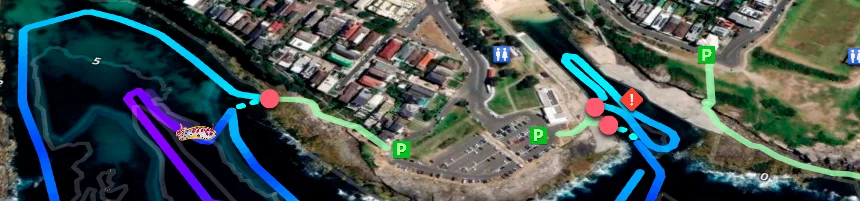
Bare Island East Location

Open full map in Pelagic
Site Brief
Best Conditions
Calm seas (<1 m swell). Protected from Northern to Easterly swells
Tide
Best on incoming tide or slack high tide
Bottom
Rock walls, boulders, sponge gardens, sandy patches
Water Temperature
Summer 22–24 °C | Winter 16–18 °C
Dive Brief
Brief
Enter the water from the northern shoreline before crossing the footbridge. Begin with a surface swim south and descend to the start of the reef wall at approximately 6 m depth. Follow the wall as it curves southeast, then south. As the wall gradually bends southwest, start heading slightly deeper, following the contour down to around 12 m. Continue along this path, exploring crevices and sponge-covered sections. Turn the dive around at 120 bar and retrace your route back to the entry point.
Exits can be rough in SE swell. Boat & kayak traffic—use DSMB when surfacing. Slippery rock entry/exit.
Marine Life
Weedy seadragons, Red Indian fish, nudibranchs, Port Jackson & Wobbegong sharks, eastern blue groper, stingrays, moray eels
Site Access
Entry/Exit
Easy
Access
Park near the Bare Island footbridge and enter the water just east of its base on the mainland side.
Parking
Park on Anzac Parade closest to the pathway to footbridge as possible.
Fees
None
Facilities
Restrooms and picnic areas
Nearby Services
Dive Shops
Abyss Scuba Diving (15.8 km / 20 min)
Common Questions
How deep is Bare Island East?
Bare Island East reaches a maximum depth of 12m. This makes it suitable for newly certified divers.
Is Bare Island East suitable for beginners?
Yes — Bare Island East is rated beginner-friendly. Newly certified divers and snorkelers will feel comfortable here.
What is the visibility like at Bare Island East?
Pelagic's Azure™ model predicts an expected visibility of around 8m at Bare Island East. Typical visibility is 5 m. Visibility varies with swell, rainfall and tidal conditions — check the live prediction above before heading out.
When is the best time to dive Bare Island East?
Calm seas (<1 m swell). Protected from Northern to Easterly swells. (Best on incoming tide or slack high tide). Use the tide chart and swell forecast above to plan your entry window.
Can you snorkel at Bare Island East?
Scuba Diving, Freediving, Snorkeling are all well suited to Bare Island East. The site is rated beginner level.
Are there any hazards at Bare Island East?
Exits can be rough in SE swell. Boat & kayak traffic—use DSMB when surfacing. Slippery rock entry/exit. See the Hazards section below for full details.
What is the water temperature at Bare Island East?
Summer 22–24 °C | Winter 16–18 °C — summer to winter range. A 5mm wetsuit is recommended for winter, while a 3mm or shorty is fine in summer.
🌊 Open on the Pelagic Map
Live visibility, diver reports and marine life sightings — all in one place. Free to use.
Open in Pelagic — Free