About Bare Island West
Sheltered western flank of Bare Island featuring a sloping reef wall and sponge gardens with reliable sightings of Red Indian fish and Port Jackson sharks.
Bare Island West Weather Forecast
About this forecast
7-day weather forecast for Sydney, NSW sourced from Open-Meteo. Daily high/low temperatures, conditions and rain probability.
Bare Island West Swell Forecast
About this forecast
Site-specific wave heights adjusted for Bare Island West's exposure, orientation and depth profile. Colour bands: green = ideal, orange = marginal, red = undiveable.
Bare Island West Tide Chart
About this chart
Today's tide chart with best on incoming tide or high‑slack conditions highlighted in green. This site dives best best on incoming tide or high‑slack. Upgrade to Essential or Pro to unlock the 5-day tide chart.



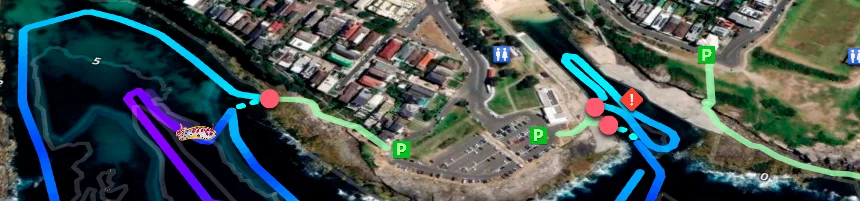
Bare Island West is the deeper, more current-exposed alternative to the island's eastern shore, and the extra complexity is rewarded with more dramatic terrain and some of the more unusual species encounters available in the broader Sydney area. A sloping reef wall drops from 7 m through sponge-garden-covered boulder slopes to a maximum of 19 m, with sandy gutters cutting between the reef sections and mild tidal currents pushing nutrients past the dense invertebrate life. Red Indianfish are a semi-reliable find here — one of the more visually striking and genuinely unusual species in the Sydney area — and Port Jackson sharks use the sandy gutters as resting grounds throughout the winter months.
Visibility averages around 7 m in good conditions. Allow at least a week after rain — runoff sensitivity is high here and clarity degrades noticeably after significant rainfall. DPV is a practical option for covering the full length of the wall in a single dive. Best dived on an incoming tide or at high slack to keep current manageable and conditions comfortable. The site is less sheltered than the east side, with occasional surge adding to the moderate tidal flow throughout the dive. Experienced divers who are comfortable working in moving water will get significantly more from this site than those who find current challenging to manage.
Plan your gas conservatively to account for the deeper sections and the return swim to the entry point, which can take longer than expected when a residual tidal current is running against you. Boat traffic overhead means a DSMB or dive flag is required on ascent regardless of how close to shore you are. Restrooms and picnic areas are available near the Bare Island bridge. Bare Island West is also a productive night dive for experienced divers who know the site well. The cave sections and boulder fields come alive after dark, and the macro life on the wall face — including nudibranch species that are cryptic in daylight — is considerably more visible when a torch illuminates the encrusting growth directly. DPV is practical at this site for covering the full wall length on a single tank, particularly on the drift sections where a scooter keeps you positioned against any residual tidal movement. Plan the dive for the incoming 2nd half to high window and allow at least a week after rain — runoff sensitivity is 4/5 and water quality degrades noticeably after significant catchment rainfall.
The heritage fort buildings and timber bridge above water are among the more characterful above-water surrounds of any Sydney dive site and are worth a look before entering the water. Restrooms and picnic areas are near the Bare Island bridge. Abyss Scuba Diving is 15.8 km (20 min).

 Site Brief
 Dive Brief
 Marine Life
 Site Access
 Nearby ServicesMore Dive Sites in Sydney