About Bongin Bongin Bay
Sheltered by rocky platforms, Bongin Bongin Bay offers calm diving with seagrass beds, reef outcrops, and abundant marine life including rays, cuttlefish, blue gropers, and the occasional turtle.
Bongin Bongin Bay Weather Forecast
About this forecast
7-day weather forecast for Sydney, NSW sourced from Open-Meteo. Daily high/low temperatures, conditions and rain probability.
Bongin Bongin Bay Swell Forecast
About this forecast
Site-specific wave heights adjusted for Bongin Bongin Bay's exposure, orientation and depth profile. Colour bands: green = ideal, orange = marginal, red = undiveable.
Bongin Bongin Bay Tide Chart
About this chart
Today's tide chart with best on incoming mid to high tide conditions highlighted in green. This site dives best best on incoming mid to high tide. Upgrade to Essential or Pro to unlock the 5-day tide chart.



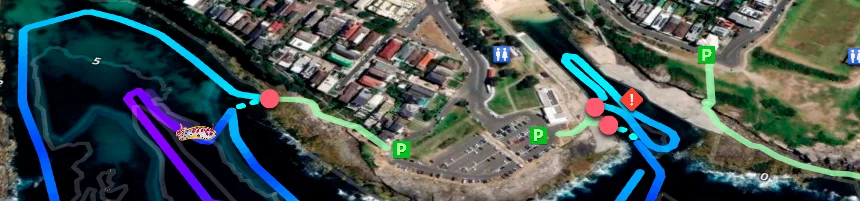
Bongin Bongin Bay sits just north of Mona Vale on the northern beaches coast, where rocky platforms shelter a bay that provides calmer conditions than the exposed headlands immediately to the north and south. The diving covers seagrass beds, reef outcrops, and scattered boulders to around 8 m, with a habitat diversity that supports a species list broader than the depth suggests. Rays are regularly encountered across the sandy and seagrass sections. Cuttlefish are a consistent sighting in the reef outcrops and kelp patches. Blue Gropers are present and approachable. Turtles visit the seagrass zone with enough frequency to make them a genuine possibility on any dive, which distinguishes this site from most of the inner harbour and southern Sydney locations where turtle sightings are rare.
Visibility averages around 8 m and the open ocean position at protection level 1/5 delivers consistent water exchange with minimal freshwater influence at runoff 1/5. Tide sensitivity is 1/5 with all phases listed as optimal. The same conditions discipline applies here as at all the exposed northern beaches sites — strong rips, currents, and swell are possible even in the sheltered bay, the entry and exit can become hazardous quickly when swell builds, and diving should only proceed in flat, calm conditions with a group. All divers should carry a float, audible signalling device, and ideally a PLB. The wave limit is 0.5 m.
The relative shelter of the bay compared to the adjacent headland sites makes Bongin Bongin a more forgiving entry in marginal conditions, but it should not be treated as a guaranteed alternative on days when the other northern beaches sites are closed out. Assess conditions at water level rather than from the road — the rocky platform entry can look calm from a distance and be considerably more challenging in person.
There are no facilities at the site. Pro Dive Manly is the closest shop at 13 km (23 min) — carry everything you need before leaving home. Night diving at Bongin Bongin is worth considering when surface conditions are calm. The seagrass beds come alive after dark with species that are inactive or hidden during the day, and the shallow depth makes the dive manageable for divers with moderate night experience. Cuttlefish behaviour in particular changes notably after dark — they are more actively hunting and less shy of dive lights than during daylight hours. The lack of facilities means a self-contained approach is necessary: carry torches, backup lights, and plan the exit carefully before the dive. The bay's shelter from swell makes the night surface and entry/exit calmer than at the adjacent headland sites.
The combination of turtle sightings, seagrass habitat, and calm bay conditions makes this one of the more interesting northern beaches options for divers willing to make the drive. Pro Dive Manly is the closest shop at 13 km (23 min).

 Site Brief
 Dive Brief
at 120 bar, turn around and follow the same trail back along the reef towards shore, returning to the same entry point.
 Marine Life
 Site Access
 Nearby ServicesMore Dive Sites in Sydney