About Bottle and Glass Point
With its rocky shoreline and sandstone reefs draped in kelp, Bottle and Glass Point offers a scenic entry into calm, shallow waters—perfect for snorkelers and freedivers chasing hidden harbour life.
Bottle and Glass Point Weather Forecast
About this forecast
7-day weather forecast for Sydney, NSW sourced from Open-Meteo. Daily high/low temperatures, conditions and rain probability.
Bottle and Glass Point Swell Forecast
About this forecast
Site-specific wave heights adjusted for Bottle and Glass Point's exposure, orientation and depth profile. Colour bands: green = ideal, orange = marginal, red = undiveable.
Bottle and Glass Point Tide Chart
About this chart
Today's tide chart with best at high tide (better visibility) conditions highlighted in green. This site dives best best at high tide (better visibility). Upgrade to Essential or Pro to unlock the 5-day tide chart.



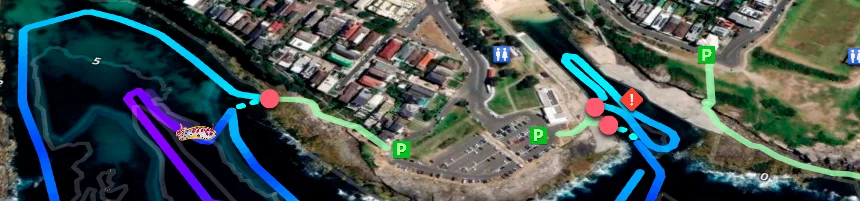
Bottle and Glass Point is a rocky harbour foreshore site on the southern side of Sydney Harbour, where sandstone reefs draped in kelp extend along the shoreline in shallow water suited to snorkelling and freediving. The underwater terrain transitions from a golden sandy beach bottom into rocky outcrops, boulders, and seagrass beds along the foreshore, providing habitat for the small harbour species that characterise this stretch of the upper harbour. The site is low-key and uncrowded compared to the more prominent harbour dive locations — a useful quality when other sites are busy or conditions at ocean sites make them inaccessible.
The marine life reflects the sheltered harbour setting. Seahorses are found in the seagrass and around the kelp-covered rocks. Octopus use the boulder crevices throughout the site. Small reef fish, nudibranchs on the rock faces, and the occasional ray moving across the sandy patches between the outcrops give the dive a consistent variety for a site this shallow and this close to the city. The kelp coverage on the sandstone ledges supports a broader invertebrate community than the brief GeoJSON description suggests, and a slow search of the weed fronds on any dive is likely to produce species not visible at first glance.
Tide sensitivity is high at 4/5 with the optimal window at incoming 2nd half and high tide only. Plan to be in the water on the second half of the incoming tide at a minimum — visibility at low tide is noticeably reduced and the shallow rocky bottom is more exposed. Visibility averages around 6.5 m in good conditions. Allow at least five days after significant rainfall before visiting — runoff sensitivity is 3/5 and harbour water quality degrades noticeably after catchment rain.
The entry and exit require dive boots — the rocks and oysters on the foreshore are sharp and uneven. Boat wake from harbour traffic can push divers onto the shallow rocky bottom near the entry point. Carry a large, highly visible float with a dive flag throughout the dive — this stretch of harbour has active boat traffic and a float is essential for safety. There are no facilities at the site. The site is best treated as a freedive and snorkel destination — the shallow depth and the nature of the terrain suit breath-hold exploration more naturally than scuba, and the entry logistics with full scuba gear over the rocky foreshore add unnecessary complexity compared to the neighbouring sites with better infrastructure. Freedivers and snorkellers can cover the full extent of the usable reef on a single session without the time pressure of managing gas at shallow depths.
Dive Centre Bondi is the nearest shop at 5.7 km (10 min).

 Site Brief
 Dive Brief
 Marine Life
 Site Access
 Nearby ServicesMore Dive Sites in Sydney