About Bronte Reef
A rarely dived but rewarding reef starting at Bronte’s south end and extending toward Shark Point. Exposed to swell, it features shallow boulders, gutters, and ledges, with a deeper DPV route offering more dramatic terrain and marine life.
Bronte Reef Weather Forecast
About this forecast
7-day weather forecast for Sydney, NSW sourced from Open-Meteo. Daily high/low temperatures, conditions and rain probability.
Bronte Reef Swell Forecast
About this forecast
Site-specific wave heights adjusted for Bronte Reef's exposure, orientation and depth profile. Colour bands: green = ideal, orange = marginal, red = undiveable.
Bronte Reef Tide Chart
About this chart
Today's tide chart with high tide for safest entry / exit conditions highlighted in green. This site dives best high tide for safest entry / exit. Upgrade to Essential or Pro to unlock the 5-day tide chart.



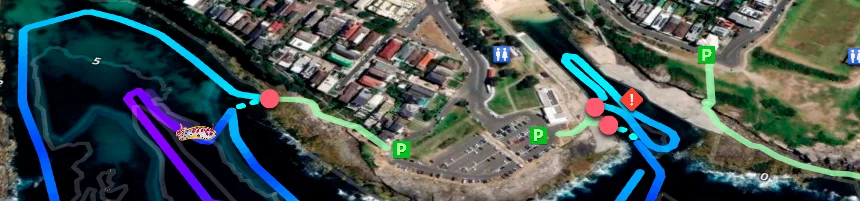
Bronte Reef is one of Sydney's least-dived accessible reef sites — a rocky boulder field extending south from Bronte Beach toward Shark Point that most divers bypass in favour of the better-known sites at either end of the headland chain. That relative obscurity is part of its appeal. The reef rarely has another diver in the water, the resident marine life is less habituated to human presence than at Clovelly and Bondi, and the terrain — shallow boulders, gutters, and ledges on the main trail with more dramatic terrain on the deeper DPV route to 15 m — is genuinely varied and interesting when conditions allow access.
The main trail to 9 m covers the boulder fields and ledge sections directly accessible from Bronte's southern end. The DPV route extends the dive significantly toward Shark Point, where the terrain deepens and becomes more complex — larger boulders, sponge growth beginning to colonise the deeper sections, and the fish life increasing in density as the habitat quality improves with depth. Visibility averages around 9 m and the open ocean position at protection level 1/5 delivers clean water with minimal runoff influence at 1/5. Tide sensitivity is 1/5 with all phases optimal — conditions planning is purely about swell and wind.
The conditions window here is narrow. The wave limit is 0.5 m and the swell threshold for safe entry cited in the GeoJSON is just 0.3 m — among the most restrictive of any Sydney shore dive — reflecting the exposed beach entry and the rip current risk at Bronte. The entry is genuinely hazardous in any meaningful swell, and the rip currents and surge common at this beach require careful assessment before committing. High tide gives the safest entry and exit. Disorientation risk in the boulder fields is high — establish a bearing before descending and maintain it throughout.
Paid parking applies at Bronte. Public toilets, showers, and cafes are available nearby, with Bronte Baths adjacent to the entry area. The seasonal angle at Bronte Reef is worth noting. The site is most reliably accessible from April through September when the dominant swell direction shifts and the windows of flat, diveable conditions are longer and more frequent. Summer's southerly swell groundswells can make the Bronte entry unviable for extended periods, while autumn brings the consistent small-swell windows that allow the site to be dived properly. The lack of other divers through this period and the clean water that follows any settled spell make a well-timed autumn or winter dive at Bronte one of the more rewarding experiences on the Eastern Suburbs circuit.
Dive Centre Bondi is the nearest shop at 2.4 km (6 min).

 Site Brief
 Dive Brief
 Marine Life
 Site Access
 Nearby ServicesMore Dive Sites in Sydney