About Bundeena Headland
Rocky headland providing opportunities for easy, shallow freediving and snorkeling over a small reef and kelp beds.
Bundeena Headland Weather Forecast
About this forecast
7-day weather forecast for Sydney, NSW sourced from Open-Meteo. Daily high/low temperatures, conditions and rain probability.
Bundeena Headland Swell Forecast
About this forecast
Site-specific wave heights adjusted for Bundeena Headland's exposure, orientation and depth profile. Colour bands: green = ideal, orange = marginal, red = undiveable.
Bundeena Headland Tide Chart
About this chart
Today's tide chart with best on incoming / high tide conditions highlighted in green. This site dives best best on incoming / high tide. Upgrade to Essential or Pro to unlock the 5-day tide chart.



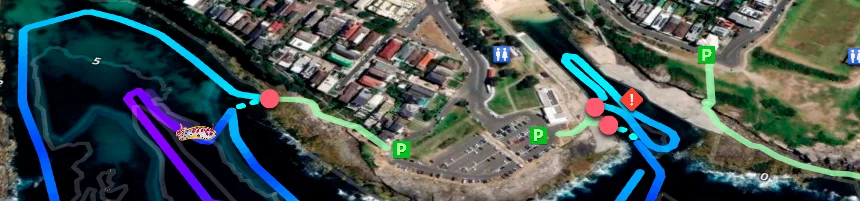
Bundeena Headland is a rocky foreshore snorkel and freedive on the northern fringe of Royal National Park, most naturally reached via the Bundeena ferry from Cronulla Wharf. The underwater terrain is a shallow rock platform extending to 4 m, covered in kelp beds and supporting the reliable collection of small reef life typical of this sheltered section of coast — leatherjackets working the kelp canopy, wrasse over the rocky sections, the occasional cuttlefish, and seasonal invertebrates for those who look carefully. It is not a destination dive in the conventional sense, but it earns its place as a relaxed, accessible option for snorkellers and freedivers wanting time in the water without driving south of the city.
The site is best at high tide when both depth and clarity improve noticeably. Swell above 1 m makes the rocky edges uncomfortable and the kelp difficult to navigate meaningfully — check the forecast before committing to the ferry trip. Give the site at least a week after any significant rainfall; the enclosed aspect of this section of the waterway means runoff lingers longer here than at open ocean sites. Take care near rock edges even when conditions seem calm, as surge can appear suddenly on an otherwise flat-looking day.
The ferry crossing from Cronulla adds a pleasant dimension to the outing. The journey takes around 30 minutes each way and the Bundeena wharf area has small cafes and shops for a post-dive coffee and debrief. It is worth timing the return ferry before you enter the water so you are not rushing the exit. Bundeena Headland also sits within the broader Royal National Park marine environment, which gives it an ecological context worth acknowledging. The kelp beds here are part of a continuous reef system that extends along the southern side of Port Hacking, and the species diversity — while modest by the standards of the more complex sites to the south — reflects the benefit of relatively low fishing pressure and the clean ocean water that comes through on the incoming tide. Snorkellers in particular find the site genuinely rewarding because the maximum depth of around 4 m puts all of the most productive kelp and reef terrain within easy breath-hold range throughout the dive. The calm conditions on the incoming tide make extended surface intervals between breath-holds comfortable, and the kelp beds are shallow enough that a good breath-hold diver can work them thoroughly without needing scuba equipment at all.
Parking is outside the National Park boundary so no entry fee applies. Public toilets and showers are at Bundeena Wharf. Abyss Scuba is the closest shop at 37.9 km (40 min) — bring everything you need before heading out.

 Site Brief
 Dive Brief
 Marine Life
 Site Access
 Nearby ServicesMore Dive Sites in Sydney