About Camp Cove
Tucked into Watsons Bay, Camp Cove is a calm, shallow dive with surprising life—think octopus, seahorses, and nudibranchs. Great for night dives and perfect for beginners or macro lovers.
Camp Cove Weather Forecast
About this forecast
7-day weather forecast for Sydney, NSW sourced from Open-Meteo. Daily high/low temperatures, conditions and rain probability.
Camp Cove Swell Forecast
About this forecast
Site-specific wave heights adjusted for Camp Cove's exposure, orientation and depth profile. Colour bands: green = ideal, orange = marginal, red = undiveable.
Camp Cove Tide Chart
About this chart
Today's tide chart with best at high tide conditions highlighted in green. This site dives best best at high tide. Upgrade to Essential or Pro to unlock the 5-day tide chart.



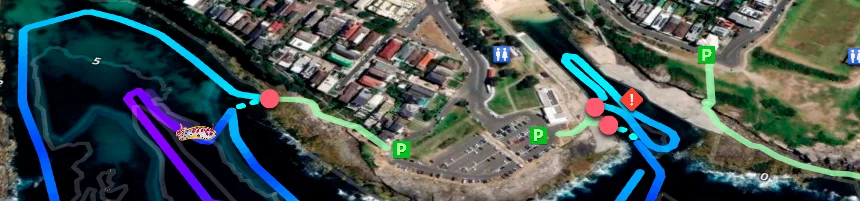
Camp Cove sits inside Watsons Bay on the northern shore of Sydney Harbour, sheltered from ocean swell by the South Head headland and benefiting from the calm harbour water that makes it one of the most approachable shore dives in the city. The bay is shallow — 4 to 7 m across most of the dive, with the southern point dropping to around 16 m for those who want more depth — and the combination of sandy bottom, reef outcrops, kelp, seagrass, and boulder fields creates a habitat mix that supports more life than its modest depth suggests. Seahorses are a genuine draw and found with reasonable consistency for divers who search the seagrass and reef edges carefully. Octopus, nudibranchs, cuttlefish, and a range of reef fish are regular sightings, and the seagrass beds support an invertebrate community rarely found at other Sydney shore dive sites.
Night diving particularly suits this site. The calm, sheltered water and the density of macro life make Camp Cove one of the better night dive options in Sydney — the boulder fields and reef outcrops come alive with nocturnal species and the low depth keeps the dive relaxed even for divers with limited night experience. Visibility averages around 6 m, typical for a harbour site, and is meaningfully better during the incoming 2nd half and high tide phases. The site carries a tide sensitivity of 4/5 — significant — and the optimal tide window is incoming 2nd half and high only. Outside that window visibility drops noticeably and the dive is less rewarding. Plan your entry to hit the water an hour or two before high tide.
Allow a few days after significant rainfall before visiting — runoff sensitivity is 3/5 and the harbour location means freshwater from catchment areas reduces clarity noticeably. Five days is a reasonable waiting period after heavy rain. Boat traffic is the primary ongoing safety consideration: always deploy a DSMB before ascending and carry a flag if available. Surge near the rocky southern areas of the bay can be greater than the sheltered setting implies.
The southern point at 16 m offers more complex reef structure than the main bay and is worth including on dives where the tide is optimal and conditions are calm. The drop-off near the point holds larger species less common in the shallow bay — leather jackets, larger wrasse, and occasional rays moving along the sand near the base of the reef. Keep boat traffic awareness heightened near the point as the harbour shipping channel is not far away and vessel movement can be significant.
There are no fees. Public toilets, showers, a kiosk, and a cafe are nearby at Watsons Bay. Dive Centre Bondi is the nearest shop at 7.5 km (15 min).

 Site Brief
 Dive Brief
 Marine Life
 Site Access
 Nearby ServicesMore Dive Sites in Sydney