About Clifton Gardens
Clifton Gardens is Sydney’s go-to muck dive—think seahorses, octopus, frogfish, and critters galore under the jetty. Shallow, sheltered, and unreal at night.
Clifton Gardens Weather Forecast
About this forecast
7-day weather forecast for Sydney, NSW sourced from Open-Meteo. Daily high/low temperatures, conditions and rain probability.
Clifton Gardens Swell Forecast
About this forecast
Site-specific wave heights adjusted for Clifton Gardens's exposure, orientation and depth profile. Colour bands: green = ideal, orange = marginal, red = undiveable.
Clifton Gardens Tide Chart
About this chart
Today's tide chart with best during high tide conditions highlighted in green. This site dives best best during high tide. Upgrade to Essential or Pro to unlock the 5-day tide chart.



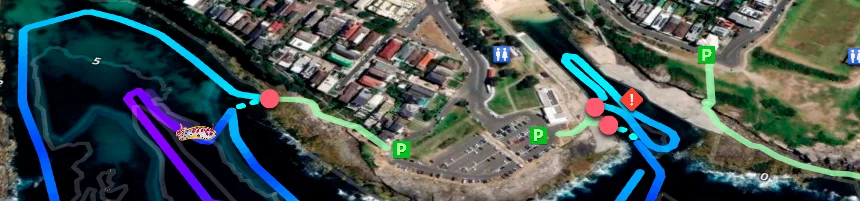
Clifton Gardens is Sydney's definitive muck dive — a shallow, silty harbour bay in Mosman where the unremarkable-looking bottom conceals one of the most productive macro environments in the city. The jetty pylons, baths netting, sandy patches, and silt substrate beneath them hold an extraordinary concentration of cryptic species. Seahorses are the headline attraction and are found here with a consistency that few other Sydney sites can match. Frogfish appear regularly and are among the species that make Clifton Gardens a destination for serious macro photographers. Octopus are abundant throughout the site. Eastern Blue Gropers, wobbegongs, and rays round out the larger species, while the sandy margins and silt patches yield nudibranchs, pipefish, and small crustaceans for divers patient enough to search carefully.
Night diving transforms the site entirely. The jetty structure and the shallow, enclosed baths area make night navigation straightforward, and the nocturnal species activity — octopus hunting on the open bottom, cuttlefish drifting through the pylons, small crabs and shrimps emerging from the silt — makes after-dark Clifton Gardens one of the richest macro night dives in Sydney. The maximum depth of 17 m on the outer sections covers a broader depth range than most harbour muck dives, allowing the dive to be extended into slightly deeper terrain for those who want more than the immediate jetty area.
Tide sensitivity is moderate at 3/5 — more forgiving than most harbour sites in this area — with the optimal window covering incoming 2nd half, high, and outgoing 1st half. This wider window gives more scheduling flexibility than the strict high-tide-only sites nearby. Visibility averages around 6 m at best but is highly variable and closely tied to both tidal phase and recent rainfall. Allow at least four to five days after heavy rain.
Entanglement is the most serious safety risk at this site. Fishing lines and netting are present throughout — always carry a dive knife or line cutter and stay close to your buddy. Buoyancy discipline is absolutely critical: the silt bottom is extremely sensitive and a single fin kick at the wrong angle destroys visibility for the entire dive. Paid parking is available nearby. The site is productive year-round but tends to be at its best in the cooler months from May through September, when water temperatures drop to 16–18°C and the invertebrate and macro species activity is highest. Frogfish encounters are more commonly reported during this period, and the colder water tends to improve visibility slightly as the thermal stratification reduces. Planning multiple dives across the site — the inner baths, the jetty pylons, and the outer sandy sections — reveals different micro-habitats that a single dive cannot fully cover.
Dive Centre Manly is the closest shop at 9.8 km (15 min).

 Site Brief
 Dive Brief
 Marine Life
 Site Access
 Nearby ServicesMore Dive Sites in Sydney