About Clovelly Wall
Clovelly Wall takes you over the tidal rock barrier to deeper waters, where you'll find a hidden reef of kelp beds, overhangs, and walls where wobbegongs and cuttlefish often lurk.
Clovelly Wall Weather Forecast
About this forecast
7-day weather forecast for Sydney, NSW sourced from Open-Meteo. Daily high/low temperatures, conditions and rain probability.
Clovelly Wall Swell Forecast
About this forecast
Site-specific wave heights adjusted for Clovelly Wall's exposure, orientation and depth profile. Colour bands: green = ideal, orange = marginal, red = undiveable.
Clovelly Wall Tide Chart
About this chart
Today's tide chart with an hour before high tide is recommended to be able to swim submerged over the wall just after the entry point. conditions highlighted in green. This site dives best an hour before high tide is recommended to be able to swim submerged over the wall just after the entry point.. Upgrade to Essential or Pro to unlock the 5-day tide chart.



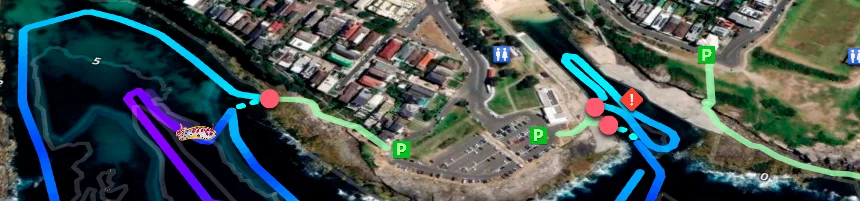
Clovelly Wall takes you beyond the sheltered pool environment and over the tidal rock barrier into open reef terrain that feels markedly different from the bay on the inside. Once across the barrier — ideally while submerged, which requires arriving approximately one hour before high tide — the reef drops away through kelp beds into overhangs and deeper wall structure reaching around 16 m. Wobbegongs are a consistent presence here, resting in the overhangs and along the ledge bases where kelp provides cover. Cuttlefish are regularly encountered in the shallower kelp, and the wall carries the sponge growth and invertebrate communities that characterise high-quality Sydney reef at this depth range. The contrast between the calm pool interior and the exposed outer wall gives the site a two-character quality that makes it more interesting than either environment alone.
The transition over the barrier is the defining element of the dive and sets the timing requirement. Arriving an hour before high tide provides enough water depth to swim across submerged rather than clambering over exposed rock — an important distinction for managing a safe, controlled entry and protecting the reef structure at the crossing point. Visibility averages around 9 m on the outer wall side, consistently better than the pool interior due to the open ocean position and clean water exchange. Tide sensitivity is 1/5 with all phases optimal — the timing requirement here is purely about practical entry logistics, not visibility or current. Runoff sensitivity is just 1/5; the open ocean position means rain has essentially no impact on water quality.
The exit from the rock platform on the outer side can become hazardous in elevated swell. If conditions deteriorate while you are underwater, the safest plan is to return via the barrier and exit at the Clovelly channel or pool entry point rather than committing to the exposed platform exit in changing conditions. Surge along the wall can make the overhang sections more difficult to work in carefully. Always carry a DSMB — boat traffic is present in the open water beyond the bay.
The outer wall beyond the barrier also holds some seasonal interest. Port Jackson sharks aggregate in the area during their breeding season from August through October, and the overhang sections can hold several individuals resting together in that period. The kelp beds in the shallower sections provide habitat for cuttlefish and sea dragons, and a slow search of the kelp fronds on any dive is likely to reveal species that a diver moving directly to the wall will miss entirely.
There are no fees. Restrooms, showers, and a cafe are at Clovelly Pool a short walk away. Dive Centre Bondi is the nearest shop at 3.6 km (8 min).

 Site Brief
 Dive Brief
 Marine Life
 Site Access
 Nearby ServicesMore Dive Sites in Sydney