About Fairy Bower
Tucked between Shelly and Manly, this hidden gem features rocky ledges teeming with schooling yellowtail, wobbegong, and variety of tropical species in the summer.
Fairy Bower Weather Forecast
About this forecast
7-day weather forecast for Sydney, NSW sourced from Open-Meteo. Daily high/low temperatures, conditions and rain probability.
Fairy Bower Swell Forecast
About this forecast
Site-specific wave heights adjusted for Fairy Bower's exposure, orientation and depth profile. Colour bands: green = ideal, orange = marginal, red = undiveable.
Fairy Bower Tide Chart
About this chart
Today's tide chart with best at mid to high tide conditions highlighted in green. This site dives best best at mid to high tide. Upgrade to Essential or Pro to unlock the 5-day tide chart.



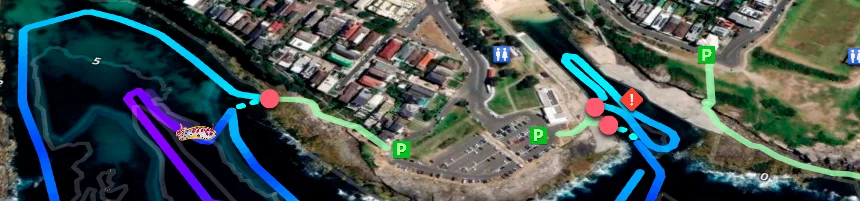
Fairy Bower sits in the sheltered rocky bay between Shelly Beach and Manly, accessible via the Bower Esplanade pathway and one of the most convenient shore dives on the northern beaches. The site is a rocky reef in shallow water to around 8 m, with boulders, kelp patches, and ledge terrain that supports a denser fish population than the depth and proximity to Manly would suggest. Schooling yellowtail are a defining feature — large, tight schools move through the bay throughout the day and create the kind of immersive fish-life experience that newer divers find memorable and experienced divers keep returning for. Wobbegong sharks rest under the ledges and on the boulder faces. Dusky sharks are occasionally sighted at the site. In summer, the warmer water draws tropical species north from the Coral Sea — the mix of resident temperate species and seasonal tropical visitors gives Fairy Bower a different character in December through March than it has in the cooler months.
Visibility averages around 8 m and the site benefits from the open ocean position at protection level 2/5, which delivers reasonably consistent water exchange. Tide sensitivity is minimal at 1/5 — all phases are listed as optimal — and runoff sensitivity is just 1/5, meaning rainfall has essentially no impact on water quality. The one parameter that demands serious attention is sediment sensitivity, rated at the maximum 5/5. The highest possible rating means the substrate here is extremely prone to disturbance — a single careless fin kick stirs silt that takes a long time to resettle and dramatically reduces visibility for everyone in the water. Buoyancy discipline is not merely good practice at Fairy Bower; it is the primary technical requirement of the dive.
The entry steps on the esplanade can be covered in moss and are very slippery — hold the railing throughout the descent to the water. Surge near the exposed rocks on the outer reef section can be significant, and north-easterly winds increase both surface chop and underwater surge, making the outer boulders uncomfortable to work around. The site is best in light westerly or southerly conditions with swell below 0.7 m.
Public bathrooms are on the esplanade and cafes are at the entry point — one of the better post-dive setups of any Sydney shore site. The sed_sens rating of 5/5 also has implications for underwater photography. Disturbing the substrate even slightly while composing a shot loses the clear water column that makes the fish-life images here so striking. Neutralise buoyancy completely before raising the camera and avoid finning near the bottom. Divers who master buoyancy at Fairy Bower will find it transfers directly to every other sensitive Sydney site.
Dive Centre Manly is the nearest shop at 1.3 km (4 min). The combination of easy access, excellent facilities, and the summer tropical season makes Fairy Bower worth visiting at different points through the year.

 Site Brief
 Dive Brief
On your return, follow the same general route back, but after about five minutes at a steady pace, veer slightly east to explore a series of drop-offs located just beyond the original entry point. In the shallows, don’t miss the serene “Fuji Rocks,” a peaceful spot where Hula fish are often seen basking in the sunbeams.
 Marine Life
 Site Access
 Nearby ServicesMore Dive Sites in Sydney