About Gunnamatta Bay Baths
Perfect for the beginner diver, this protected netted swimming baths provides a different experience with potential seahorses found on the nets
Gunnamatta Bay Baths Weather Forecast
About this forecast
7-day weather forecast for Sydney, NSW sourced from Open-Meteo. Daily high/low temperatures, conditions and rain probability.
Gunnamatta Bay Baths Swell Forecast
About this forecast
Site-specific wave heights adjusted for Gunnamatta Bay Baths's exposure, orientation and depth profile. Colour bands: green = ideal, orange = marginal, red = undiveable.
Gunnamatta Bay Baths Tide Chart
About this chart
Today's tide chart with best at mid to high tide for depth and cleaner water conditions highlighted in green. This site dives best best at mid to high tide for depth and cleaner water. Upgrade to Essential or Pro to unlock the 5-day tide chart.



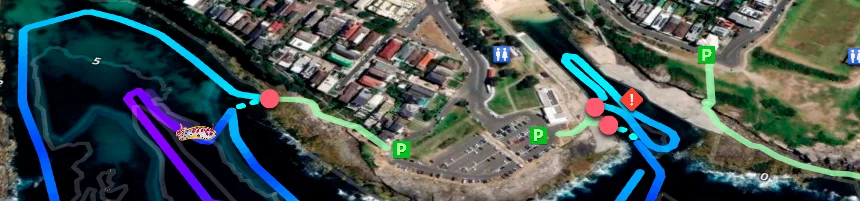
Gunnamatta Bay Baths is a protected netted swimming enclosure on the calm western shore of Port Hacking, and one of the most accessible dive sites in the Sutherland Shire. The baths sit in fully sheltered water, maxing out at 7 m, with a sandy and seagrass bottom that hosts a reliable cast of macro life — seahorses on the nets, stingrays resting in the shallows, nudibranchs on the structure, and the occasional octopus working the edges of the enclosure. It is a genuine beginner venue, a solid training location for lower visibility diving, and a dependable night dive option when conditions elsewhere are too rough.
Visibility averages 4 m and is extremely tide-sensitive — high tide is the single optimal window for water clarity. The site has the highest tide sensitivity rating possible, meaning visibility can halve at the wrong phase. The site is susceptible to runoff and is best avoided for at least a week after heavy rain. Avoid diving here after storms regardless of how the surface looks — water quality beneath can remain poor for longer than expected.
Buoyancy control is critical here. The silt bottom disturbs instantly and a single careless fin stroke can end visibility fast. Move slowly, stay horizontal, and keep fins well off the bottom throughout the dive. Always carry a dive knife — fishing lines drop from the foreshore and from small boats working the bay, and entanglement is a hazard that is present in and around the nets. Stingrays are common in the sandy shallows, so shuffle your feet rather than stepping normally as you enter and exit.
The baths are also one of the few Sydney sites where the stingray population is reliable enough to plan a dive specifically around. Smooth stingrays rest on the sandy patches and beneath the seagrass throughout the day and are particularly approachable at this site compared to more trafficked locations. Approaching slowly from the side rather than directly from above gives the best sighting opportunity without disturbing them. Shovelhead rays are also occasionally encountered in the deeper sand channels at the outer edge of the netting, and the combination of ray species with the resident seahorses makes Gunnamatta one of the more species-diverse shallow macro sites in the Sutherland Shire despite its modest depth and visibility.
The Gunnamatta Pavilion provides public toilets, changing facilities, and showers. The adjacent foreshore park has BBQs, a children's playground, a disabled toilet, and covered picnic areas — one of the better-equipped facilities of any dive site in the Sutherland Shire. The closest dive shop is Abyss Scuba Diving - 11.1 km away.

 Site Brief
 Dive Brief
 Marine Life
 Site Access
 Nearby ServicesMore Dive Sites in Sydney