About Jibbon Heads
Rocky coastal headland featuring submerged bommies and stunning beach coves.
Jibbon Heads Weather Forecast
About this forecast
7-day weather forecast for Sydney, NSW sourced from Open-Meteo. Daily high/low temperatures, conditions and rain probability.
Jibbon Heads Swell Forecast
About this forecast
Site-specific wave heights adjusted for Jibbon Heads's exposure, orientation and depth profile. Colour bands: green = ideal, orange = marginal, red = undiveable.
Jibbon Heads Tide Chart
About this chart
Today's tide chart with slack to incoming tide conditions highlighted in green. This site dives best slack to incoming tide. Upgrade to Essential or Pro to unlock the 5-day tide chart.



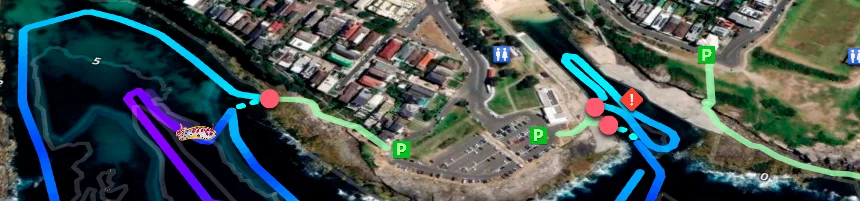
Jibbon Heads is a rocky coastal headland at the southern end of Bundeena in Royal National Park, where submerged bommies rise from a sandy slope at 2–7 m and a series of small beach coves make the above-water setting as appealing as what lies below. The underwater terrain centres on scattered rocky bommies in a sandy, kelp-patched environment, with good fish life around the bommie structures and Grey Nurse sharks occasionally sighted in the deeper sections off the point. It is a freediving and snorkelling site only — the shallow terrain and distance from any dive infrastructure make scuba impractical — but in flat conditions it delivers genuinely attractive underwater scenery and an unhurried experience that rewards a well-chosen day.
The site is strictly conditions-dependent, more so than most Sydney locations. Swell must be below 0.5 m without exception, and the northern point should be left completely alone if any swell is breaking there — what looks manageable from the surface deteriorates quickly at the waterline. On a calm incoming tide with visibility reaching 6 m or better, the bommies are accessible and enjoyable. On anything else it is simply not worth the risk or the effort of getting there.
Allow at least a week after any significant rainfall before visiting — the site has high runoff sensitivity and water quality degrades notably after rain. The 40-minute drive to the nearest dive shop reinforces the planning requirement: monitor conditions carefully and pick your day with discipline. The ferry approach from Cronulla is a pleasant alternative to the road and adds a comfortable boat crossing to the outing. Jibbon Heads is most productively dived as part of a broader Bundeena day trip. The ferry crossing from Cronulla sets the tone — arriving by water rather than road gives the dive a different character — and combining Jibbon Heads with a walk to the Jibbon rock engravings on the headland above makes for a genuinely complete outing. The engravings are among the most significant Aboriginal heritage sites in the Sydney region and sit directly above the dive site, giving the location a cultural depth that most dive sites lack. Allow at least a week after heavy rain before visiting — the runoff sensitivity of 4/5 and the exposed headland position mean water quality degrades noticeably after significant rainfall and recovery takes time.
Check the return ferry time before you enter the water. Parking is outside the National Park boundary — no entry fee applies. Public toilets are at Bundeena Wharf. Abyss Scuba is the nearest shop at 37.9 km (40 min) — well worth calling ahead for a local conditions update before committing to the trip out to Bundeena and Jibbon.

 Site Brief
 Dive Brief
 Marine Life
 Site Access
 Nearby ServicesMore Dive Sites in Sydney