About Malabar Wreck & Reef
Explore the scattered remains of the MV Malabar—a 1925 passenger-cargo ship that ran aground in heavy fog in 1931. This scenic DPV route winds along the coastline from Malabar Beach, passing the ship’s engine block and flywheel before reaching deeper waters around Long Bay's dramatic northern headland.
Malabar Wreck & Reef Weather Forecast
About this forecast
7-day weather forecast for Sydney, NSW sourced from Open-Meteo. Daily high/low temperatures, conditions and rain probability.
Malabar Wreck & Reef Swell Forecast
About this forecast
Site-specific wave heights adjusted for Malabar Wreck & Reef's exposure, orientation and depth profile. Colour bands: green = ideal, orange = marginal, red = undiveable.
Malabar Wreck & Reef Tide Chart
About this chart
Today's tide chart with incoming to high tide conditions highlighted in green. This site dives best incoming to high tide. Upgrade to Essential or Pro to unlock the 5-day tide chart.



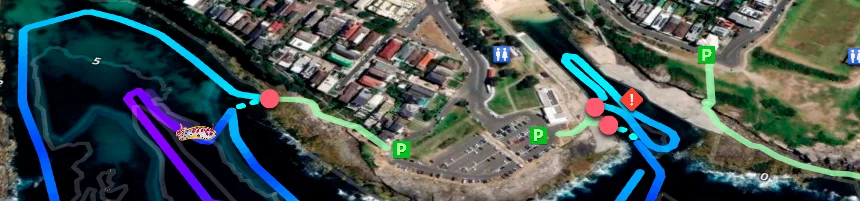
The Malabar Wreck is the scattered remains of the MV Malabar — a 1925 passenger-cargo vessel that ran aground in heavy fog in 1931 on the rocky coastline south of Malabar Beach. What remains is spread across the reef in fragments: the engine block and flywheel are the most substantial and most visited pieces, sitting in 8–23 m of water along a DPV route that winds south from Malabar Beach past the wreck sections and out toward the dramatic northern headland of Long Bay. The combination of heritage wreckage, rocky reef, and the deep terrain around the headland gives this site a range and variety that no single dive can fully cover.
DPV is essentially mandatory for reaching the best sections efficiently. The turnaround point for the wreck itself is around 500 m from the entry — beyond that distance without a scooter, the surface swim back becomes a significant exertion that cuts into bottom time and limits how much of the terrain divers can actually explore. The route beyond 500 m toward the headland is recommended via DPV only and should not be attempted by fin-powered divers without extensive experience and a twinset or stage cylinder. The wreck sections themselves are heritage-protected — do not remove or disturb any artefact.
Visibility averages around 10 m and the site is notably more tolerant than most Sydney shore dives. Tide sensitivity is just 1/5 with all phases listed as optimal, and the wave limit is 1.1 m — substantially higher than the harbour and bay sites. Runoff sensitivity is 2/5, meaning rainfall has minimal impact on water quality. The protection level of 3/5 provides reasonable shelter from direct ocean swell. Heavy surge near the wreck and around the point remains a hazard even in moderate conditions — assess carefully before committing to the outer sections.
Sharp, rusty metal is present throughout the wreck debris field — gloves are advisable. Always carry a float or DSMB given the boat traffic along this stretch of coast. There are no facilities at the site. The wreck also has genuine historical interest worth researching before the dive. The MV Malabar was carrying passengers and cargo when it grounded in fog in 1931, and the circumstances of the grounding — a vessel that knew the coast well, taken by a combination of fog, current, and a navigation error — are a useful reminder of the conditions that claimed ships on this stretch of coastline. The engine block and flywheel are the most intact remaining pieces and are large enough to provide genuine scale and context underwater. Heritage protection applies — no collection or disturbance of artefacts.
Pro Dive Alexandria is the closest shop at 10.2 km (17 min), with Dive Centre Bondi at 10.1 km (18 min).

 Site Brief
 Dive Brief
 Marine Life
 Site Access
 Nearby ServicesMore Dive Sites in Sydney