About Mona Vale Beach
This sheltered rocky reef dive features boulders, reef breaks and seagrass zones, where you can spot octopus, turtles, and schools of kingfish.
Mona Vale Beach Weather Forecast
About this forecast
7-day weather forecast for Sydney, NSW sourced from Open-Meteo. Daily high/low temperatures, conditions and rain probability.
Mona Vale Beach Swell Forecast
About this forecast
Site-specific wave heights adjusted for Mona Vale Beach's exposure, orientation and depth profile. Colour bands: green = ideal, orange = marginal, red = undiveable.
Mona Vale Beach Tide Chart
About this chart
Today's tide chart with best on incoming mid to high tide conditions highlighted in green. This site dives best best on incoming mid to high tide. Upgrade to Essential or Pro to unlock the 5-day tide chart.



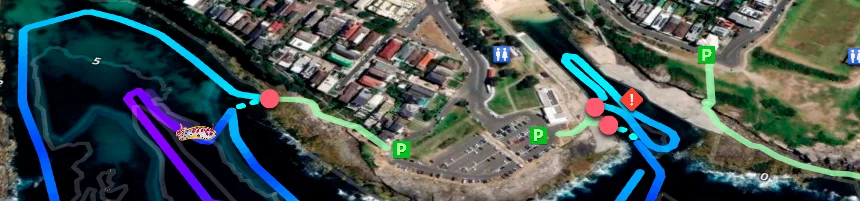
Mona Vale Beach sits on the northern beaches coast where a sheltered rocky reef and seagrass zone extends from the southern end of the beach, providing a more protected diving environment than the fully exposed headland sites to the south. The terrain covers boulders, reef breaks, and seagrass beds to around 13 m, with a habitat mix that produces a wider range of species than a single reef type alone would support. Octopus use the rocky crevices throughout the site. Turtles — a notable sighting at this northern beaches location — visit the seagrass zones and are regularly reported by divers. Schools of kingfish move through the open water sections above the reef, and the deeper kelp-covered drop-offs hold the standard mix of resident reef species including wobbegongs, Blue Gropers, and leatherjackets.
Visibility averages around 8 m and the open ocean position at protection level 1/5 delivers clean water exchange with minimal runoff influence at 1/5. Tide sensitivity is 1/5 with all phases optimal, so planning is purely about surface conditions. The wave limit is 0.5 m and the same conditions caution applies here as across the northern beaches exposed sites — strong rips, currents, and swell are possible, the entry and exit can be hazardous in elevated sea states, and all divers should carry a float, audible device, and ideally a PLB. Only dive in calm, flat conditions and always with a group.
DPV is tagged for this site and suits the layout well — the seagrass zone, reef breaks, and kelp drop-offs are spread over enough area that a scooter covers the full site range efficiently in a single dive. A DPV also helps manage any current in the open water sections between the reef structures, allowing divers to hold position and observe rather than burning energy fighting flow.
Paid parking is available at Mona Vale Beach. Public bathrooms, showers, and cafes are on site. Pro Dive Manly is the closest shop at 12.7 km (22 min) — the northern beaches location means drive times to shops are longer than for the Manly-area sites. The seagrass zone is the ecological highlight that separates Mona Vale from the more reef-focused northern beaches sites. Healthy seagrass beds in this condition are increasingly rare along the Sydney coast, and the species they support — turtles, rays, pipefish, and the invertebrate communities in the rhizome mat below the leaf canopy — reflect decades of relatively undisturbed growth. Divers should avoid all contact with the seagrass when finning through the beds, and maintain enough clearance above the leaf tips that turbulence from fin strokes does not disturb the sediment layer beneath. The ecological value of this habitat is the reason the site is worth the longer drive from central Sydney.
Plan gas and equipment checks before leaving — Pro Dive Manly at 12.7 km (22 min) is the closest shop.

 Site Brief
 Dive Brief
 Marine Life
 Site Access
 Nearby ServicesMore Dive Sites in Sydney