About Palm Beach
Palm Beach’s southern headland offers sheltered reef diving down to 15 metres, with rocky outcrops, kelp forests, and seagrass beds teeming with marine life — making it an enjoyable and scenic dive.
Palm Beach Weather Forecast
About this forecast
7-day weather forecast for Sydney, NSW sourced from Open-Meteo. Daily high/low temperatures, conditions and rain probability.
Palm Beach Swell Forecast
About this forecast
Site-specific wave heights adjusted for Palm Beach's exposure, orientation and depth profile. Colour bands: green = ideal, orange = marginal, red = undiveable.
Palm Beach Tide Chart
About this chart
Today's tide chart with best on incoming mid to high tide conditions highlighted in green. This site dives best best on incoming mid to high tide. Upgrade to Essential or Pro to unlock the 5-day tide chart.



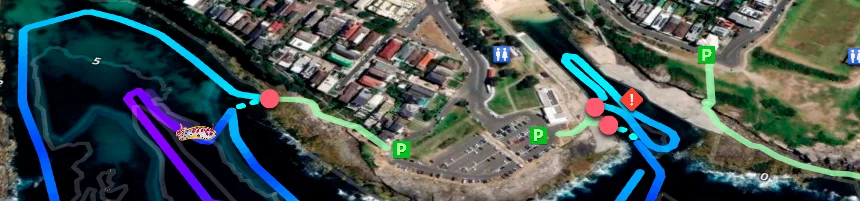
Palm Beach headland sits at the northern tip of the northern beaches peninsula, where the southern headland of Palm Beach drops into rocky reef terrain to around 16 m, with kelp forests, rocky valleys, and seagrass beds providing habitat for a marine life community that benefits from the relative scarcity of diving pressure this far from the city. The additional distance — 36 minutes from the nearest dive shop — filters out casual visitors and means the marine life here is less habituated to divers than at the more accessible Manly and Bondi area sites. Species that would flush at Shelly Beach approach more closely here, and the seagrass beds hold healthy seahorse and pipefish populations that the heavily visited sites further south struggle to match.
The reef structure follows the familiar northern beaches pattern of rocky outcrops, kelp-covered valleys, and ledge terrain, but the 16 m maximum depth provides more vertical range than most of the intermediate northern beaches sites. The kelp forests are among the more extensive of any Sydney shore dive and in good visibility their vertical extent — from the rocky bottom to the surface canopy — creates a genuinely impressive underwater landscape. DPV is tagged for this site and suits the layout well, allowing efficient coverage of the kelp forest and deeper valley sections.
Tide sensitivity is moderate at 3/5 — the optimal window is incoming 2nd half and high, worth accounting for in planning but not a strict constraint. Visibility averages around 8 m. Runoff sensitivity is 3/5 — allow four to five days after rain. The site is fully exposed at protection level 1/5 and the northern beaches conditions caution applies in full: strong rips, currents, and swell are possible; dive only in flat, calm conditions; carry a float, audible device, and ideally a PLB. The wave limit is 0.5 m and should be respected strictly given the remote location and the distance from the nearest shop.
Paid parking applies. Public bathrooms, showers, and cafes are on Ocean Road further up from the entry. Pro Dive Manly is the closest shop at 25.7 km (36 min) — the furthest drive in this northern beaches group. Palm Beach rewards the additional distance with a quality of experience that the more accessible northern beaches sites increasingly struggle to provide. The kelp forest sections in particular are among the most intact on the Sydney coast — dense, healthy, and supporting the full complement of species that depend on that habitat. Plan the visit for a genuinely flat day, arrive early, and allow time for a second dive — the terrain the first dive starts to reveal is worth returning for.
Self-sufficiency in planning and equipment is essential. Pro Dive Manly is the closest shop at 25.7 km (36 min).

 Site Brief
 Dive Brief
 Marine Life
 Site Access
 Nearby ServicesMore Dive Sites in Sydney