About Rocky Point Island
Rocky Point Island in Balmain offers a calm and accessible snorkel, with shallow sandstone reef surrounding the island.
Rocky Point Island Weather Forecast
About this forecast
7-day weather forecast for Sydney, NSW sourced from Open-Meteo. Daily high/low temperatures, conditions and rain probability.
Rocky Point Island Swell Forecast
About this forecast
Site-specific wave heights adjusted for Rocky Point Island's exposure, orientation and depth profile. Colour bands: green = ideal, orange = marginal, red = undiveable.
Rocky Point Island Tide Chart
About this chart
Today's tide chart with best at high tide conditions highlighted in green. This site dives best best at high tide. Upgrade to Essential or Pro to unlock the 5-day tide chart.



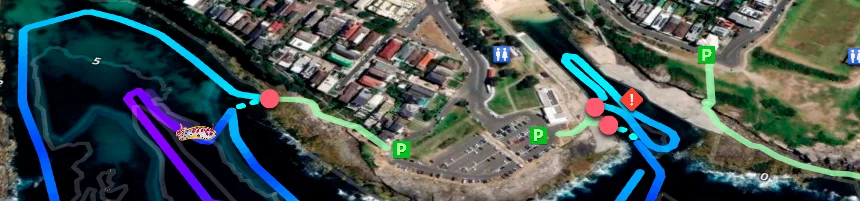
Rocky Point Island sits in the inner harbour at Balmain, a small sandstone outcrop surrounded by shallow reef that provides a calm snorkel and freedive environment in the heart of one of Sydney's most historic waterfront neighbourhoods. The underwater terrain is modest — kelp and seagrass over a rocky reef to around 3 m — but the site delivers the kind of accessible, low-pressure harbour exploration that introduces new snorkellers to Sydney's underwater environment without the complexity of deeper or more exposed sites. The kelp coverage on the sandstone provides habitat for small reef fish, nudibranchs on the rock faces, and the occasional seahorse or pipefish in the seagrass margins.
The inner harbour location gives Rocky Point Island a different ecological character from the ocean-facing reef sites. Species here are adapted to the warmer, calmer, lower-visibility conditions of the upper harbour — smaller, more cryptic, and often more approachable than their ocean-reef counterparts. A slow, patient snorkel around the island perimeter consistently produces more sightings than a faster circuit, particularly in the sections where kelp is thickest and the rock faces carry the most encrusting growth. Morning dives tend to have better light penetration and calmer surface conditions than afternoon sessions when harbour traffic increases.
Tide sensitivity is high at 4/5 — the optimal window is incoming 2nd half and high tide only. Visibility averages around 6 m at its best, dropping noticeably at low tide when the shallow reef is less covered and bottom disturbance is more concentrated. Runoff sensitivity is 3/5; allow at least four to five days after significant rainfall before visiting. The site is well protected at prot_lvl 4/5 — swell from the open harbour is minimal and the site remains calm in most weather conditions. Boat traffic further off the point is the primary safety consideration — carry a dive flag throughout the snorkel.
Parking is available nearby with fees. Bathrooms and a shower are directly adjacent to the entry point. Rocky Point Island is also a useful site for understanding the ecology of Sydney's inner harbour in a context that is easy to observe systematically. The compressed scale of the site — a small island perimeter in very shallow water — means the habitat zones are visible in their entirety on a single snorkel session. The kelp edge, the seagrass margin, the sandy patches between the rocks, and the boulder crevice habitat all sit within a few metres of each other, making it easy to observe how different species partition the space and how that usage changes across the tidal cycle. For anyone interested in harbour ecology rather than reef diving per se, Rocky Point Island offers an unusually legible study site.
There are no nearby dive shops — this is a snorkel and freedive site that does not require shop support for most visits.

 Site Brief
 Dive Brief
 Marine Life
 Site AccessMore Dive Sites in Sydney