About Shark Island
Freedive and snorkel around exposed rocky reef break 100-150m offshore, famous for world-class surfing waves and requiring very calm conditions for safe diving.
Shark Island Weather Forecast
About this forecast
7-day weather forecast for Sydney, NSW sourced from Open-Meteo. Daily high/low temperatures, conditions and rain probability.
Shark Island Swell Forecast
About this forecast
Site-specific wave heights adjusted for Shark Island's exposure, orientation and depth profile. Colour bands: green = ideal, orange = marginal, red = undiveable.
Shark Island Tide Chart
About this chart
Today's tide chart with recommended to dive at high tide only conditions highlighted in green. This site dives best recommended to dive at high tide only. Upgrade to Essential or Pro to unlock the 5-day tide chart.



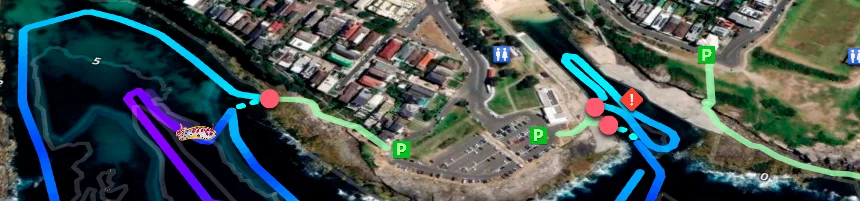
Shark Island sits 100–150 m offshore from the southern end of Cronulla, a submerged rocky reef that breaks the surface in larger swells and hosts world-class surfing waves during south-east groundswells. Underwater, the exposed reef platform drops to around 12 m and carries a rocky reef assemblage that surprises divers given how relentlessly the site is battered above the surface. The fish life around the reef is good, and there is something genuinely novel about diving a famous surf break in the stillness that only flat conditions bring.
This one is strictly for freedivers and snorkellers — scuba access is described as extremely difficult given the steep rock-hopping to get down to the beach. The site is viable from the late incoming tide through high and into the early outgoing — Pelagic identifies the incoming 2nd half, high, and outgoing 1st half as the optimal window — so a falling tide on a calm day is also worth considering. That combination is the same one that makes the surf flat and the entry and exit manageable; when conditions are anything else, the site is simply not worth attempting. A dive float with flag is recommended throughout given the boat and jet-ski traffic in the area.
Picking your day carefully is the entire challenge here. Monitor the swell forecast for at least 48 hours before heading out, aim for the highest tide of the day, and be prepared to abort if conditions have shifted even slightly from the forecast. The window when this site is both accessible and rewarding is genuinely narrow, which is precisely why it receives fewer visitors than it deserves.
Despite the logistical demands, Shark Island delivers a quality of underwater experience that justifies the rock-hopping effort. The wall section accessible at high tide carries sponge growth and invertebrate communities more typically associated with deeper open reef sites, and the kelp beds on the shallower side of the island support species not easily found at the more heavily visited Eastern Suburbs sites. The combination of low visitors — a direct consequence of the access difficulty — and consistent ocean water quality gives the site an undisturbed character that makes every sighting feel earned. For freedivers and snorkellers willing to read the conditions carefully, Shark Island is one of the most rewarding spots on the southern Sydney coast.
Visibility averages around 7 m on a good day. There are no facilities at the site — the nearest toilets and café are at Cronulla Beach, a short drive north. Abyss Scuba Diving is the closest shop 11.5 km away.

 Site Brief
 Dive Brief
 Marine Life
 Site Access
 Nearby ServicesMore Dive Sites in Sydney