About Shiprock
A vertical wall that drops to 12m, home to colorful sponges, nudibranchs, and over 130 fish species.
Shiprock Weather Forecast
About this forecast
7-day weather forecast for Sydney, NSW sourced from Open-Meteo. Daily high/low temperatures, conditions and rain probability.
Shiprock Swell Forecast
About this forecast
Site-specific wave heights adjusted for Shiprock's exposure, orientation and depth profile. Colour bands: green = ideal, orange = marginal, red = undiveable.
Shiprock Tide Chart
About this chart
Today's tide chart with dive only during slack tide to avoid a strong current, ideally high tide for best visibility. conditions highlighted in green. This site dives best dive only during slack tide to avoid a strong current, ideally high tide for best visibility.. Upgrade to Essential or Pro to unlock the 5-day tide chart.



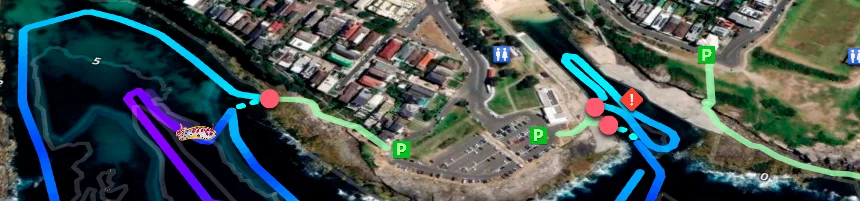
Shiprock is one of the most biologically dense wall dives in Sydney, and also one of the most demanding to time correctly. A sheer drop runs from the surface to around 12 m before the wall gives way to a sand and silt bottom at 17 m, and every centimetre of that wall is colonised — sponges, nudibranchs, soft corals, and over 130 recorded fish species packed into a relatively compact stretch of reef on the southern arm of Port Hacking. The bubble cave is a highlight — where two divers can comfortably surface to have a chat 13m deep. Just don't breath the stale air! The current that makes the site demanding also makes it an excellent drift dive when conditions allow — let the tidal flow carry you along the wall rather than swimming against it.
And speaking of current... this is the catch. Shiprock sits in a tidal funnel and runs strong — fast enough to make the dive dangerous on anything other than slack tide, and fast enough to carry silt off the bottom and drop visibility from acceptable to less than a meter. The accepted window is 30 minutes either side of high tide slack, ideally after at least two weeks of significant rain. On a good day you might catch visibility at 6 m or more (typically during winter). However, the average visibility is around 3 - 4 m. A modest figure that doesn't really reflect how rewarding the dive is when conditions align. Night diving here is exceptional: the invertebrate life on the wall comes alive after dark and the site takes on a completely different character that justifies the planning it requires.
The main entry and exit is via the sandstone steps beside the rock formation that gives the site its name. It's important to be aware of the heavy boat traffic and surfacing above the wall is not safe. Come up the wall and into the shallows on your ascent. A DSMB should be used everywhere else. Mid-week dives are noticeably easier to manage than weekends when vessel traffic in Port Hacking is at its heaviest.
The site also has strong seasonal variation worth accounting for. Water temperature drops to around 15°C through winter, which tends to increase visibility and invertebrate life on the wall face. The nudibranchs and flatworms that use the wall as their primary habitat are most diverse from June through September, and photographers who visit specifically for these species consistently rate the winter wall at Shiprock among the best nudibranch diving in the Sydney region.
There are no facilities on site. Abyss Scuba Diving is 10.8 km and Pro Dive Alexandria is 21.5 km from the site.

 Site Brief
 Dive Brief
[Wall Exploration] Follow the wall to the right. Watch for the bubble cave entrance early along this section — it's a distinctive landmark.
[Deeper Water] Rocky outcrops sit off the wall in deeper water. Take time to explore these features as you progress along the route.
[Return & Ascent] On the way back, ascend slightly on the wall for a different perspective and added bottom time in shallower water.
[Macro Finale] Finish your dive searching the wall for macro life — excellent hunting ground for small subjects.
 Marine Life
 Site Access
 Nearby ServicesMore Dive Sites in Sydney