About South Bondi
Just past Bondi Icebergs, Squid Bay offers sheltered access into its rocky reef habitat. Expect a nice variety of marine life for relaxed dives when the swell is low.
South Bondi Weather Forecast
About this forecast
7-day weather forecast for Sydney, NSW sourced from Open-Meteo. Daily high/low temperatures, conditions and rain probability.
South Bondi Swell Forecast
About this forecast
Site-specific wave heights adjusted for South Bondi's exposure, orientation and depth profile. Colour bands: green = ideal, orange = marginal, red = undiveable.
South Bondi Tide Chart
About this chart
Today's tide chart with best at high tide conditions highlighted in green. This site dives best best at high tide. Upgrade to Essential or Pro to unlock the 5-day tide chart.



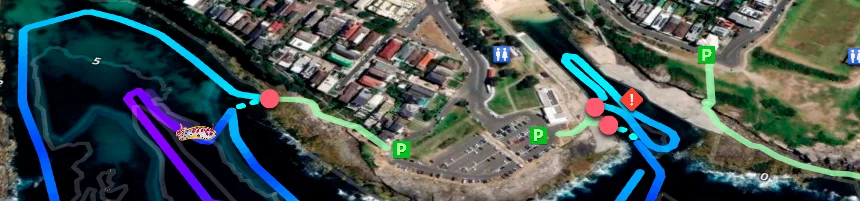
South Bondi — known locally as Squid Bay — sits just past the Bondi Icebergs pool on the southern end of the beach, where a rocky reef habitat extends along the headland below the waterline. The site offers relaxed diving along ledges, kelp beds, and rocky reef to around 12 m, with the character of the dive changing considerably depending on how far toward Mackenzies Point you venture. In the immediate bay the conditions are calm and the marine life is approachable — cuttlefish, octopus, Blue Gropers, and nudibranchs along the reef edges are reliable sightings for divers who take their time. Further toward the point the terrain deepens and the exposure increases, with currents strengthening noticeably as you approach Mackenzies Point itself.
Visibility averages around 9 m and the site benefits from the open ocean position at protection level 1/5, which delivers consistent water exchange and keeps runoff influence at just 1/5 — rainfall has minimal impact on water quality here and no post-rain waiting period is required. Tide sensitivity is also 1/5 with all tide phases listed as optimal, so conditions planning focuses on swell and wind rather than tidal windows. The wave limit is 0.5 m, and above that the entry across the rocky headland becomes hazardous — the access requires care even in calm conditions due to the slippery surfaces and surge exposure.
Grey Nurse sharks and cave features are associated with the deeper terrain around the point, though these require venturing further from the sheltered bay section into more exposed and current-prone water. Only experienced divers should continue toward Mackenzies Point — the current near the point is substantially stronger than the bay interior suggests and conditions there are less forgiving. Always check weather and tide before entering; the exposed southern Bondi location can deteriorate quickly when swell builds from the south-east.
The site is also worth considering for night diving on calm evenings. The rocky reef and ledge sections in the sheltered bay area are accessible in the dark and the nocturnal activity — octopus hunting, cuttlefish active in the kelp, and nudibranchs on the reef margins — makes a night dive here genuinely rewarding. The proximity to Bondi Beach facilities and the short walk from the road also make the logistics straightforward compared to more remote night dive sites.
Parking fees apply in the Bondi area. Public restrooms, showers, cafes, and shops are available at Bondi Beach. Dive Centre Bondi is the nearest shop at 1.2 km (3 min) — arguably the most convenient shop-to-site proximity of any Sydney shore dive. The short distance makes it practical to check in at the shop before the dive for a conditions update and recent species sightings from staff who dive the site regularly.

 Site Brief
 Dive Brief
 Marine Life
 Site Access
 Nearby ServicesMore Dive Sites in Sydney