About South Malabar
South Malabar features shallow rocky reef, gutters, and sponge-covered bommies, making it ideal for relaxed dives and underwater photography.
South Malabar Weather Forecast
About this forecast
7-day weather forecast for Sydney, NSW sourced from Open-Meteo. Daily high/low temperatures, conditions and rain probability.
South Malabar Swell Forecast
About this forecast
Site-specific wave heights adjusted for South Malabar's exposure, orientation and depth profile. Colour bands: green = ideal, orange = marginal, red = undiveable.
South Malabar Tide Chart
About this chart
Today's tide chart with incoming to high tide conditions highlighted in green. This site dives best incoming to high tide. Upgrade to Essential or Pro to unlock the 5-day tide chart.



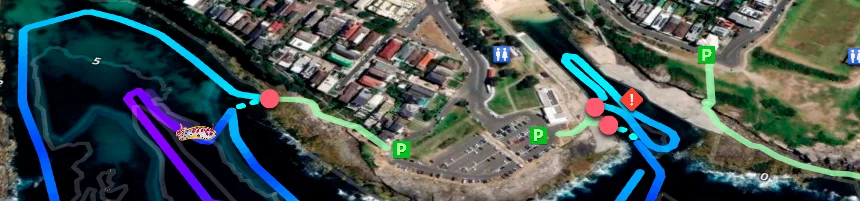
South Malabar sits just south of Malabar Beach on Sydney's eastern coast, where shallow rocky reef, gutters, and sponge-covered bommies extend from the shoreline out to a main reef system approximately 550 m from the entry point. The shallow reef near the entry is accessible and pleasant enough, but the main reef at distance is where the character of the site fully reveals itself — sponge-covered bommies, gutters cutting through the rocky base, and the species density that comes with reef structure well removed from regular diver pressure. The distance to the main reef makes this a site that rewards fitness, a twinset, or a DPV over a single-tank, standard-configuration approach.
Visibility averages around 10 m and the site is notably forgiving by Sydney shore dive standards. The wave limit is 1.1 m — the same as the Malabar Wreck to the north — and the protection level of 2/5 means the site absorbs more swell than the fully exposed headland sites before conditions become unmanageable. Tide sensitivity is just 1/5 with all phases listed as optimal, meaning tidal timing is irrelevant to conditions planning. Runoff sensitivity is low at 2/5 — rainfall has minimal impact on water quality here and no post-rain waiting period is required. The site dives on its sea state almost exclusively.
The 550 m surface swim to the main reef on the way out, and the return surface swim at the end of the dive, require honest assessment of fitness and remaining gas. Divers who use the main reef as their turnaround point on a single tank will find the surface return consumes significantly more energy than the outbound swim, particularly if any swell or current has developed during the dive. A DPV eliminates this constraint entirely and allows proper exploration of the main reef system rather than a brief visit before turning back. A surface float or DSMB is essential given the boat traffic along this stretch of open coast.
There are no fees and no facilities at South Malabar. South Malabar also rewards multiple visits for divers interested in the reef ecology at this depth and exposure level. The bommies on the main reef carry a sponge community that changes character through the year — denser and more colourful through winter, slightly bleached by the warmer summer water but still substantial. The gutters between the bommies concentrate fish life in a way that the flat sandy sections between the reef do not, and working the gutters systematically on a DPV gives a very different perspective on the site than a free-swimming approach at the same depth. The combination of tolerant conditions and genuinely interesting main reef terrain makes South Malabar a site that deserves more attention than its low profile in the Sydney diving community currently reflects.
Pro Dive Alexandria is the closest shop at 10.2 km (17 min), with Dive Centre Bondi at 10.1 km (18 min).

 Site Brief
 Dive Brief
 Marine Life
 Site Access
 Nearby ServicesMore Dive Sites in Sydney