About The Leap
Famous drift dive with a giant stride entry from a rocky ledge. Home to the world’s highest density of Weedy Sea Dragons, plus vibrant sponge gardens and swim-throughs like Garth’s Orifice and The Chimney.
The Leap Weather Forecast
About this forecast
7-day weather forecast for Sydney, NSW sourced from Open-Meteo. Daily high/low temperatures, conditions and rain probability.
The Leap Swell Forecast
About this forecast
Site-specific wave heights adjusted for The Leap's exposure, orientation and depth profile. Colour bands: green = ideal, orange = marginal, red = undiveable.
The Leap Tide Chart
About this chart
Today's tide chart with must dive on incoming tide only. just after high tide recommended for best conditions. conditions highlighted in green. This site dives best must dive on incoming tide only. just after high tide recommended for best conditions.. Upgrade to Essential or Pro to unlock the 5-day tide chart.



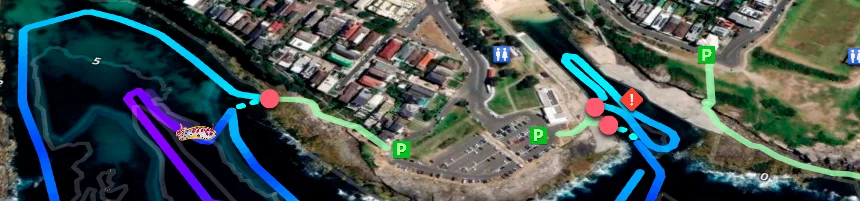
The Leap is one of the finest shore dives in Sydney and one of the few that makes genuine demands before you step off the ledge. Entry is a committed giant stride from a two-metre rock platform directly into the current, and from that point the dive runs entirely on the ocean's schedule. You are carried along the reef with the current over sponge-covered boulders and narrow rock canyons dropping to 23 m. The deep wall is one of the highlights and is not to be missed. Further along it's possible to spot a Weedy Sea Dragon (or two) drifting through the kelp. Named swim-throughs including Garth's Orifice and The Chimney cut through the reef along the route. A DPV significantly extends what you can cover — the canyon system and sponge gardens stretch well beyond what a fin-powered diver can comfortably reach and return from on a single tank. The exit is at The Steps, 400 m northwest — there is no practical way to turn back once the drift has you, so plan accordingly before entering.
Tide is everything here. The dive must be done on an incoming tide, with the current running northwest toward the exit. Time your entry for 1.5 hours before high tide — when the current is running consistently and the sea dragons are most active in the flow. Swell must be 0.5 m or less; moderate northerly or easterly winds are grounds to abort entirely and return another day. Visibility reaches 10 m or better on most days and can exceed 20 m in good winter conditions.
Current runs moderate to strong. Good buoyancy control is a genuine prerequisite — divers who struggle to hold position in current will find the deeper canyon sections difficult to manage safely. Carry audible and visual signalling devices given the exposed headland location.
The Leap is also one of the few Sydney sites where the quality of the dive scales directly with the diver's experience level across multiple visits. A first dive here typically focuses on navigation and the swim-throughs. A second and third visit opens up the sponge garden sections and the deeper canyon terrain that early dives tend to miss in favour of staying on track. Regular visitors to this site report consistently different experiences across seasons — the Weedy Sea Dragons that characterise the site are most active and most visible during their breeding season from October through December, and the invertebrate density on the boulders and wall faces is noticeably higher through the cooler winter months.
A National Park day fee of $8 per vehicle applies. No facilities at the dive site, however there are bathrooms back along Cap Solander Drive. Abyss Scuba Diving is the closest shop at 18.9 km away.

 Site Brief
 Dive Brief
 Marine Life
 Site Access
 Nearby ServicesMore Dive Sites in Sydney