About Wedding Cake Island
Scenic DPV reef and wall dive along the submerged valley between Coogee Beach headland and Wedding Cake Island—diving excellent reef formations and abundant fish life.
Wedding Cake Island Weather Forecast
About this forecast
7-day weather forecast for Sydney, NSW sourced from Open-Meteo. Daily high/low temperatures, conditions and rain probability.
Wedding Cake Island Swell Forecast
About this forecast
Site-specific wave heights adjusted for Wedding Cake Island's exposure, orientation and depth profile. Colour bands: green = ideal, orange = marginal, red = undiveable.
Wedding Cake Island Tide Chart
About this chart
Today's tide chart with best near slack tide to minimize surge conditions highlighted in green. This site dives best best near slack tide to minimize surge. Upgrade to Essential or Pro to unlock the 5-day tide chart.



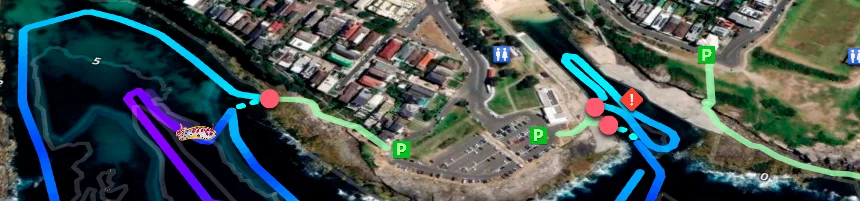
Wedding Cake Island sits approximately 300 m offshore from Coogee Beach and is one of the most visually distinctive dive destinations on the Sydney coast. The submerged valley running between the island and the headland is the main feature — a rocky reef corridor with walls beginning around 5 m and dropping to 17 m, densely lined with sponges, ascidians, and a fish population that benefits from the island's protected status. The topography creates a natural channel that concentrates life and provides a defined route through the dive, making it an excellent intermediate option for divers who want genuine depth and visibility with a clear navigation structure.
Visibility averages around 11 m — among the better figures for a Sydney shore dive — and the open ocean position with minimal freshwater influence keeps the water consistently clear. Tide sensitivity is 1/5 and all tide phases are listed as optimal, meaning you plan this dive around sea conditions rather than tidal timing. Runoff sensitivity is just 1/5, so a dry period beforehand is not required the way it is for harbour and bay sites. The site is fully exposed at protection level 1/5, and current through the gap between the island and headland can be influenced by both swell and tidal flow. On calm days this is manageable; on bigger days the same movement becomes a meaningful energy and navigation consideration.
DPV is the recommended way to experience the full extent of the site. A scooter covers the valley, the island walls, and the reef formations beyond the immediate entry zone in a single dive and lets you work efficiently against any current rather than burning gas fighting it manually. The entry from the rock platform is steep and slippery — assess conditions before committing, with particular attention to surge near the rocks. Shore break and wave sets can arrive without much warning, and the entry requires confident water handling skills.
Navigational awareness is important once inside the valley and around the island — the current or drift conditions can disorient divers unfamiliar with the site, and the outer sections beyond the immediate valley require careful tracking of your position relative to the entry point. Always carry a DSMB. The valley between the island and the headland also supports seasonal variation worth noting — during winter months the water temperature drops to around 16°C and the invertebrate density on the walls increases, making it one of the better cold-water macro dives in the eastern suburbs. In summer, water clarity often improves further as the thermocline settles and pelagic species become more active in the shallower sections above the reef.
Grant Reserve has a public restroom nearby. Dive Centre Bondi is the closest shop at 4.7 km (10 min), with Pro Dive Alexandria at 7.4 km (17 min).

 Site Brief
 Dive Brief
 Marine Life
 Site Access
 Nearby ServicesMore Dive Sites in Sydney