About Yena Gap
Yena Gap, near Cape Solander, is one of Sydney’s deepest shore dives, with towering rock walls and abundant marine life including sharks, rays, and octopus.
Yena Gap Weather Forecast
About this forecast
7-day weather forecast for Sydney, NSW sourced from Open-Meteo. Daily high/low temperatures, conditions and rain probability.
Yena Gap Swell Forecast
About this forecast
Site-specific wave heights adjusted for Yena Gap's exposure, orientation and depth profile. Colour bands: green = ideal, orange = marginal, red = undiveable.
Yena Gap Tide Chart
About this chart
Today's tide chart with best on incoming tide 1hr before high slack conditions highlighted in green. This site dives best best on incoming tide 1hr before high slack. Upgrade to Essential or Pro to unlock the 5-day tide chart.



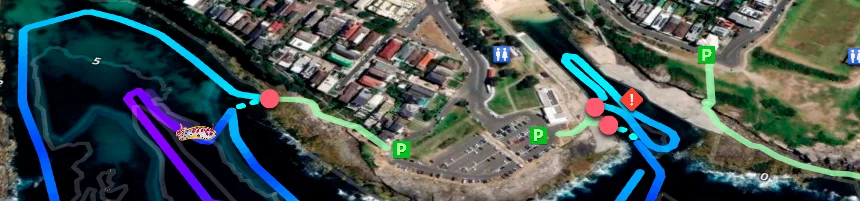
Yena Gap sits near Cape Solander on the Kurnell Peninsula, where a sheer rock wall drops from the surface to around 24 m in one of the deepest and most dramatic shore dives accessible from Sydney. The walls tower above the diver and the structure extends along the cape in both directions from the entry point, with rocky reef and sand at the base and encrusting growth colonising the vertical faces from the waterline down. Sharks and rays are regular sightings along the wall. Octopus are found in the crevices throughout the site. The species density and scale of the wall terrain put Yena Gap in a different category from the harbour and bay sites that make up most of the Sutherland Shire shore dive inventory.
Visibility averages around 12 m — among the higher figures for a shore dive in this part of Sydney — driven by the open ocean position at protection level 1/5 and the consistent water exchange that the Cape Solander headland generates. Tide sensitivity is moderate at 3/5, with the optimal window at incoming 2nd half and high. Arriving around one hour before high slack gives the best combination of visibility and manageable current along the wall. Outside the optimal window the current strengthens and the dive becomes progressively more demanding. Runoff sensitivity is 3/5 — avoid the site for at least four to five days after significant rainfall.
The site carries serious advanced conditions caveats. The shore entry is exposed, the rocks are slippery, and surge is present near the entry platform even in moderate conditions. Current along the wall is variable and can change direction during the dive. Buoyancy must be maintained carefully to avoid contact with the reef as depth increases and gas narcosis becomes a factor in the deeper sections. The wave limit is 0.4 m — do not attempt this site above that threshold. Assess the exit before entering, as the exit can be more challenging than the entry when conditions have shifted during the dive.
A National Park day fee of $8 per vehicle applies. Restrooms and BBQs are at the park information centre. Abyss Scuba Diving is the nearest shop at 19.2 km (23 min) — plan thoroughly before departing. Yena Gap rewards preparation and conservatism. Plan thoroughly before entering — target depth, turn time, DSMB deployment point, and wall sections to cover — then execute without deviation. Walls of this scale draw divers deeper and further than planned, and the remote location means any problem is harder to resolve than at a more forgiving site. Divers who apply that discipline consistently rate it among the most impressive shore dives on the Sydney coast.
DSMB is mandatory; surface close to shore and well clear of any boat traffic present in the area.

 Site Brief
 Dive Brief
 Marine Life
 Site Access
 Nearby ServicesMore Dive Sites in Sydney